Ankle and foot
Notice whether the foot remains supported while the knee travels and whether footwear or surface changes the experience.
Why small, repeatable ranges of motion can support better preparation, more confident loading, and a less hurried relationship with movement.
Mobility is not a performance to display; it is a conversation with the body.
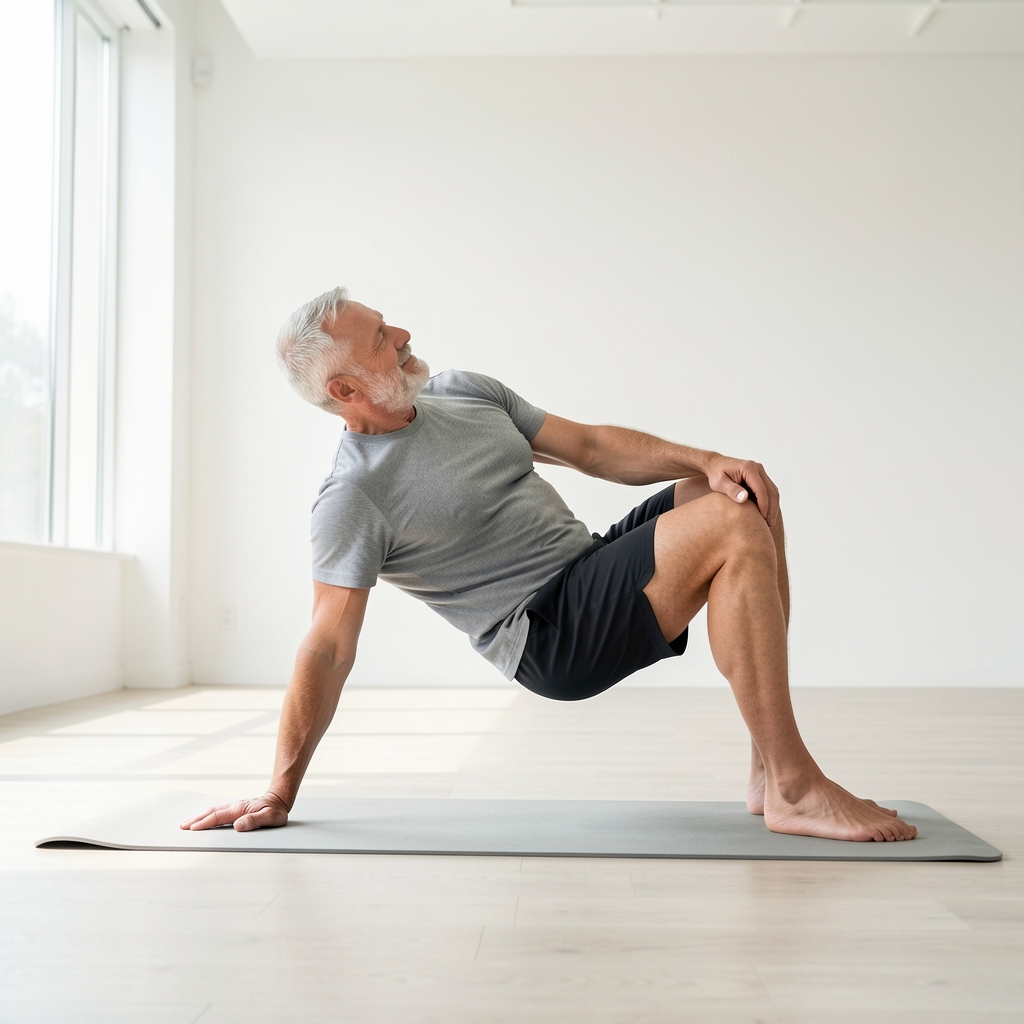

Mobility work is often framed as a collection of stretches. A more useful view treats it as practice in accessing and controlling the ranges that daily life and training ask for.
A comfortable range is not necessarily a useful range if it cannot be controlled. Slow repetitions, pauses, and light resistance help reveal where coordination needs attention without turning every session into a maximal test.
Five to ten minutes after a walk, before strength work, or during a break from a desk can be enough to establish a habit. Consistency matters more than a complicated sequence.
Differences from side to side are common. They become a reason to seek qualified assessment when accompanied by persistent pain, swelling, loss of function, or a meaningful change in normal movement.
Mobility describes how a joint and the surrounding body can move with control, awareness, and enough strength for the task. Flexibility is one part of that picture, but it does not explain whether a reader can use a position comfortably while walking, lifting, or changing direction. Prylan therefore treats mobility as a practice of usable movement rather than a performance in a stretch.
For men over 35, the context may include long periods at a desk, repeated commuting, recreational sport, or a return to training after a long gap. Those details change the useful starting point. A short daily sequence may be more practical than a long session performed once a week, and a controlled partial range can be a sensible bridge toward a fuller position.
“The question is not how far a joint can be moved, but how clearly the movement can be used.”
“A small practice repeated with attention can reveal more than a dramatic test.”
“Mobility belongs inside strength, walking, reaching, and turning.”
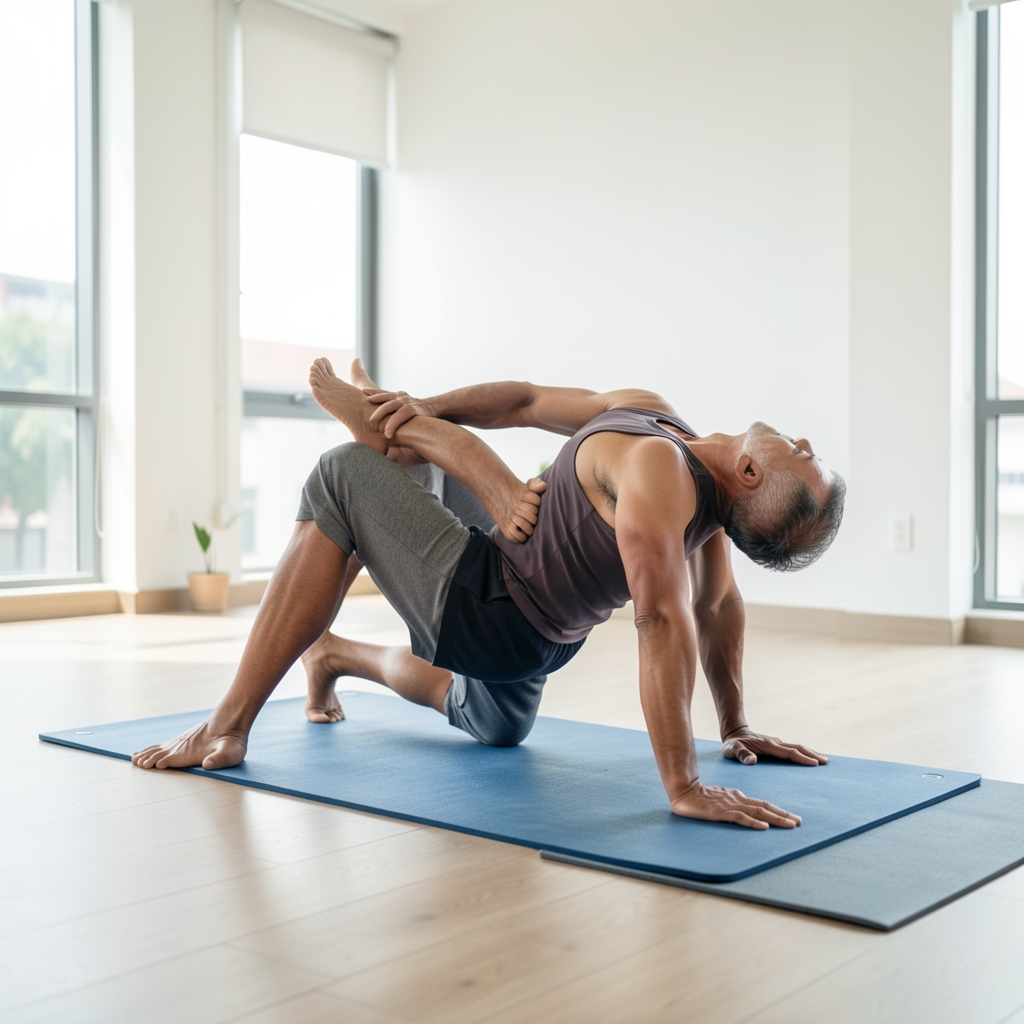
A useful sequence can begin with breathing and a comfortable standing position, continue through slow ankle, hip, shoulder, and upper-back movements, and finish with a task-specific rehearsal. Each position should remain easy enough to leave without forcing an end range. The sequence can be shortened on a busy day without losing its purpose.
This approach helps distinguish a temporary feeling of stiffness from a broader movement question. It also gives a reader language to share with a qualified professional if a position is uncomfortable or unclear.
Notice whether the foot remains supported while the knee travels and whether footwear or surface changes the experience.
Observe the difference between a hinge, a squat, and a rotation. They are related but not identical tasks.
Consider how breathing, reaching, and trunk rotation interact when the shoulders are asked to move.
| Movement question | Useful observation | Simple adjustment |
|---|---|---|
| Can I reach overhead? | Rib position and shoulder path | Reduce range and slow the return |
| Can I squat comfortably? | Foot support and balance | Use a box or stable support |
| Can I rotate? | Pelvis and upper-back contribution | Separate the movement into smaller parts |
Contact Prylan at Jalan Sudirman No. 23, Karet Semanggi, Jakarta Selatan, DKI Jakarta 12922, Indonesia, or +62 21 784 5932 with editorial questions.